Mia Zimmermann · 30 September 2026
Mapping Real-Time Data Pathway Fluctuations Across Multi-Cloud Setups with Targeted Oversight Tools
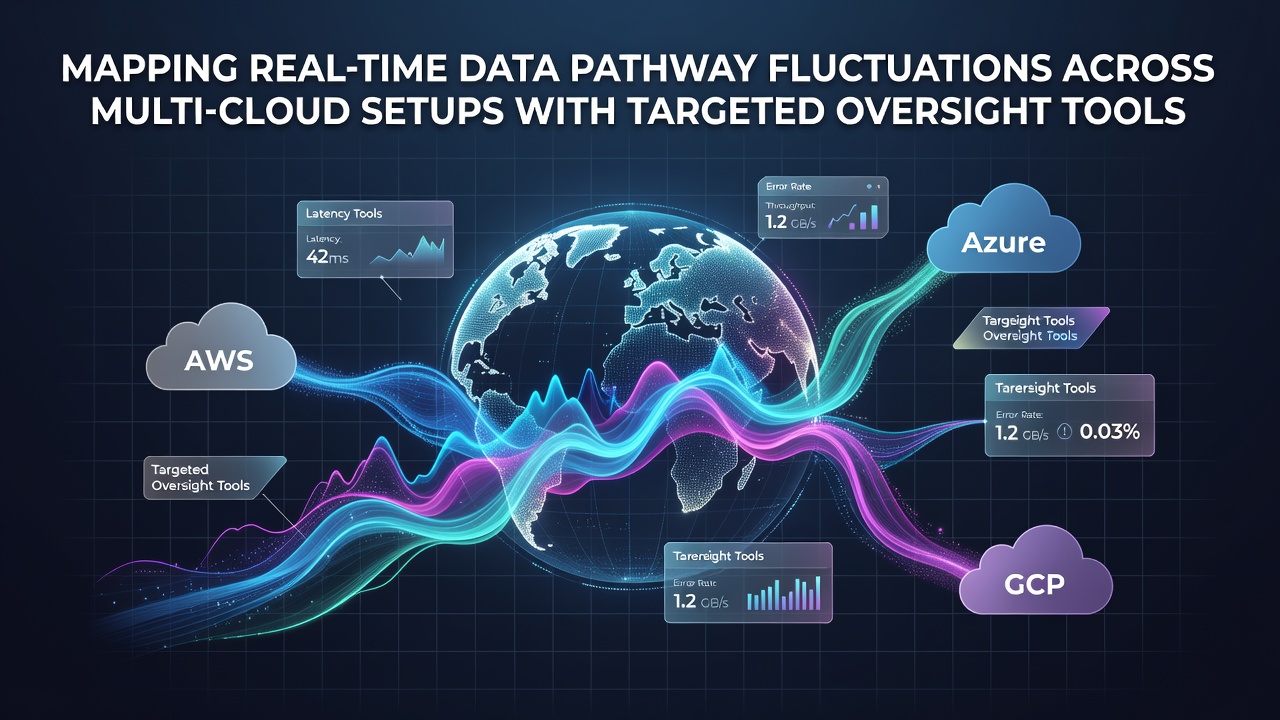
Organizations distribute workloads across providers like AWS, Azure, and Google Cloud, which generates intricate data pathways that shift constantly under varying loads and configurations. Research indicates these pathways experience fluctuations in latency, throughput, and routing decisions every few seconds, making static monitoring insufficient for maintaining operational integrity. Data from industry reports shows multi-cloud adoption reached 87 percent among enterprises by early 2025, with projections pointing to further growth through September 2026 as hybrid strategies expand.
Core Components of Data Pathway Mapping
Mapping begins with discovery of all active connections between services, storage layers, and network segments spread across different cloud accounts. Tools collect metadata on packet flows, API calls, and inter-region transfers, then correlate timestamps to reveal patterns in real time. Observers note that effective mapping requires integration of telemetry from each provider's native APIs alongside third-party collectors, because relying on a single source often leaves gaps in visibility. Studies from academic institutions highlight how path reconstruction algorithms use graph theory to model these connections, allowing teams to trace a data packet's journey from origin to destination without manual intervention.
Detecting Fluctuations in Real Time
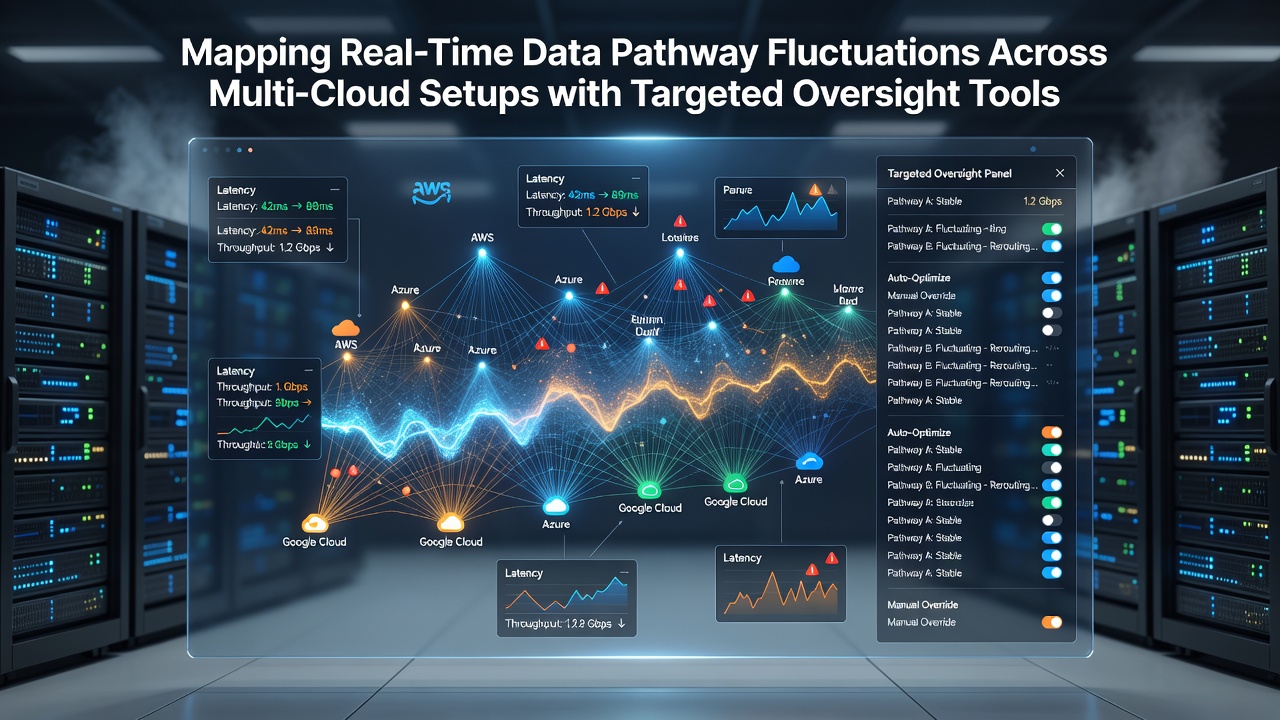
Fluctuations appear as sudden spikes in latency, rerouting events triggered by congestion, or unexpected drops in bandwidth that affect downstream applications. Targeted oversight tools apply anomaly detection models trained on historical baselines, flagging deviations within milliseconds of occurrence. Evidence suggests that combining machine learning with rule-based thresholds improves accuracy, since pure statistical methods can miss context-specific changes common in multi-cloud traffic. In September 2026, updates to several observability platforms introduced enhanced support for cross-provider event correlation, enabling faster identification of issues that span multiple environments.
Selecting and Deploying Oversight Tools
Teams evaluate tools based on their ability to ingest heterogeneous data formats, support custom querying, and scale with growing cloud footprints. Platforms that offer unified dashboards across providers reduce context switching, while those with open APIs allow integration into existing incident response workflows. Researchers discovered that organizations achieve better results when they prioritize tools with built-in support for service mesh technologies, because these meshes expose granular metrics on service-to-service communication that traditional network monitors overlook. Deployment typically starts with pilot environments focused on high-traffic pathways, followed by gradual expansion once validation confirms reliable detection rates.
Practical Examples from Deployed Environments
One financial services firm mapped pathways across three cloud providers and identified recurring latency spikes during peak trading hours caused by cross-region data replication delays. After implementing targeted oversight, the team adjusted routing policies and reduced average fluctuation impact by measurable margins within weeks. Another case involved a healthcare provider that used similar tools to track protected data flows, ensuring compliance requirements remained satisfied even as pathways shifted due to provider-side maintenance events. Reports from these implementations emphasize the value of continuous validation rather than one-time configuration.
Integration with Broader Infrastructure Practices
Pathway mapping fits into larger observability strategies that also cover application performance, security posture, and cost allocation. When linked with configuration management databases, the maps help teams understand how code changes or infrastructure updates alter data routes. According to NIST cloud computing guidance, consistent telemetry standards across providers simplify these integrations and reduce the risk of blind spots. A separate analysis from Australian government cybersecurity resources notes that organizations combining mapping tools with automated response playbooks experience shorter mean times to resolution for pathway-related incidents.
Challenges and Mitigation Approaches
Encryption, dynamic IP addressing, and provider-specific abstractions can obscure pathway details, requiring specialized decryption capabilities or metadata enrichment techniques. Resource overhead from continuous monitoring also demands careful capacity planning to avoid inflating cloud bills. Experts have observed that phased rollouts combined with sampling strategies keep overhead manageable while preserving detection fidelity. Data indicates that regular audits of tool configurations prevent drift that could otherwise lead to missed fluctuations over time.
Conclusion
Mapping real-time data pathway fluctuations in multi-cloud setups relies on coordinated use of targeted oversight tools that deliver correlated visibility across providers. As environments grow more distributed through September 2026 and beyond, the practices outlined here provide a factual framework for maintaining awareness of shifting conditions without introducing subjective interpretations. Organizations continue to refine these approaches through measured deployments and integration with established standards.